Guitar learning resources
How to choose your first acoustic guitar
The best first guitar is not the fanciest one. It is the instrument that fits the student, stays in tune and feels good enough to pick up again tomorrow.
Start with the player, not the brand
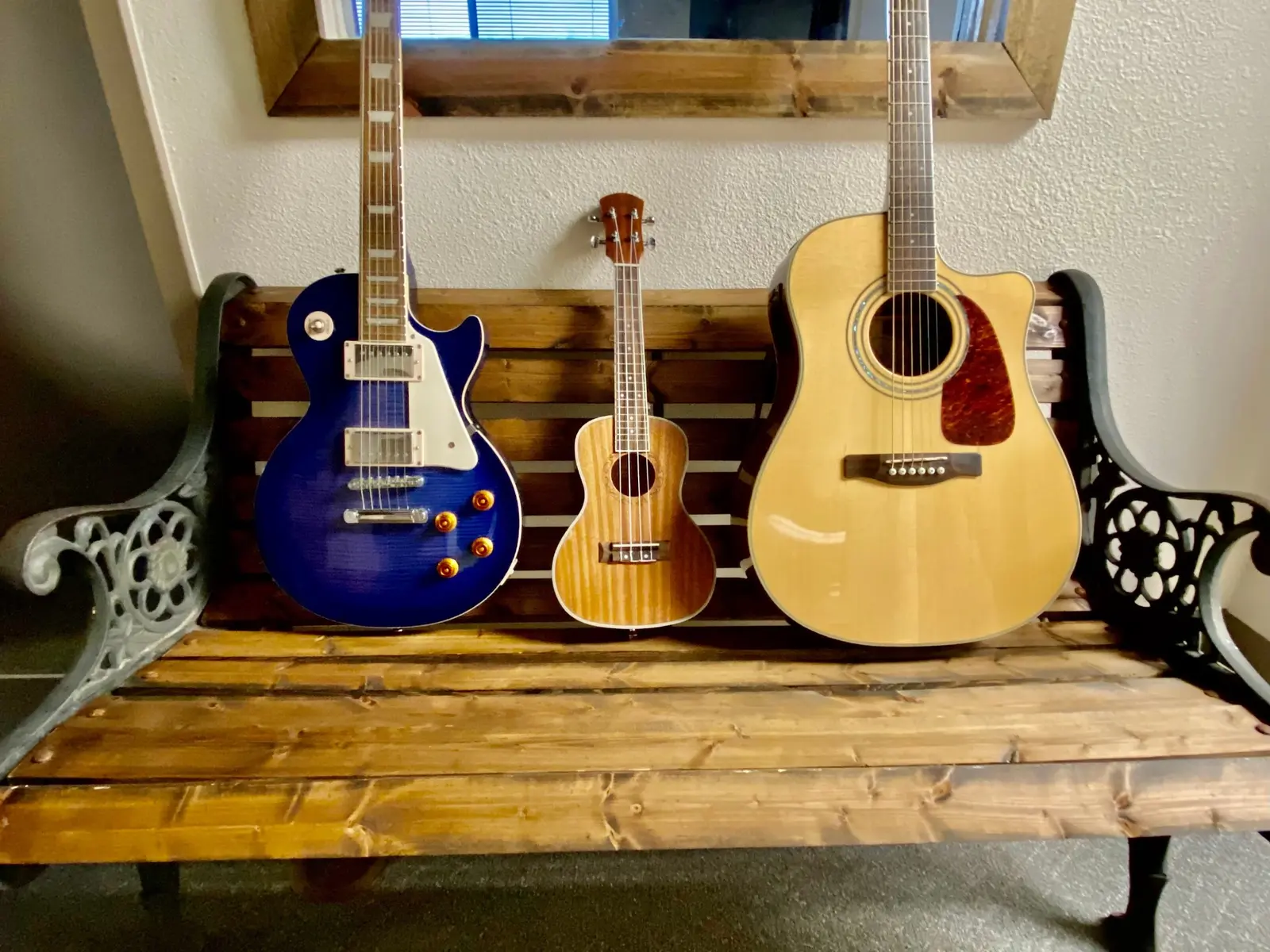
A guitar should fit the student’s body and musical goals. A full-size dreadnought can sound powerful but may feel bulky to a child or smaller adult. Concert, orchestra and three-quarter-size guitars can be easier to hold. The student should be able to sit comfortably, reach the first fret and see both hands without twisting.
Playability matters more than decoration
High strings make an otherwise attractive guitar frustrating. Ask a reputable shop to check the action—the distance between the strings and fretboard—and confirm that the neck is straight, the frets feel smooth and the tuning machines work reliably. A basic professional setup can make a modest guitar much easier to learn on.
Choose steel-string or nylon-string intentionally
Steel-string acoustics are common for pop, country, folk, campfire and worship music. Nylon-string guitars feel softer under the fingers and suit classical or certain fingerstyle goals, but the wider neck feels different. Choose according to the music the student wants to play rather than assuming one type is always easier.
Starter guitars worth comparing
Yamaha FS800
A full-scale concert-size acoustic that is easier to hold than a large dreadnought. A strong model to compare for teens, adults and smaller-framed players.
View and purchase at SweetwaterYamaha JR1
A compact three-quarter-size option for a child or smaller beginner who struggles to reach comfortably around a full-size body.
View and purchase at SweetwaterThese are examples to compare, not a guarantee that either model fits every student. Prices, specifications and availability are controlled by the retailer. Jacob Burrows Music does not sell or fulfill these products.
Start with the GuitarTuna app
Most beginners probably do not need to purchase a clip-on tuner right away. GuitarTuna uses the phone or tablet microphone, identifies the string being played and gives clear visual feedback showing whether the pitch is too low, too high or in tune. Because most students already have access to a device, it is an easy way to learn the standard tuning sequence—E, A, D, G, B, E—without adding another item to the first-guitar budget.
For the clearest reading, tune in a quiet room, hold the device near the guitar and pluck one string at a time. The app needs microphone access to hear the instrument. Its basic download is free, while optional features and subscriptions may be offered inside the app.
When a clip-on tuner is still useful
A clip-on tuner reads vibration through the guitar’s headstock, so it often works better in a noisy rehearsal, church, classroom or performance setting. It is also useful when the student should not depend on a phone. Beginners can start with GuitarTuna and add a D’Addario Eclipse clip-on tuner later if those situations apply.
Helpful accessories
- Kyser Quick-Change capo for changing keys while using familiar chord shapes.
- D’Addario EJ16 light acoustic strings as a common replacement-string option for full-size steel-string acoustics. Confirm the correct gauge for your guitar first.
Set a complete budget
Leave room for picks, a strap if needed, a stand or case and replacement strings. A used guitar can be a strong value when an experienced player or technician checks it first. Avoid buying solely from a listing that does not allow you to inspect the neck, action and tuning stability.
Use this quick first-guitar checklist
- The body size feels comfortable while seated.
- The student can reach the first few frets without strain.
- Every tuning machine turns smoothly and holds pitch.
- Notes ring clearly without unusual buzzing.
- The strings are not painfully high above the fretboard.
- The guitar supports the music the student actually wants to learn.
If you are unsure, bring the model name or listing to a free discovery session. Jacob can help you think through the choice before beginning online acoustic guitar lessons.