
Guitar learning resources
What beginners should learn first on guitar
A strong beginning is not a race to collect chords. It is learning a few useful skills well enough to make music with them.
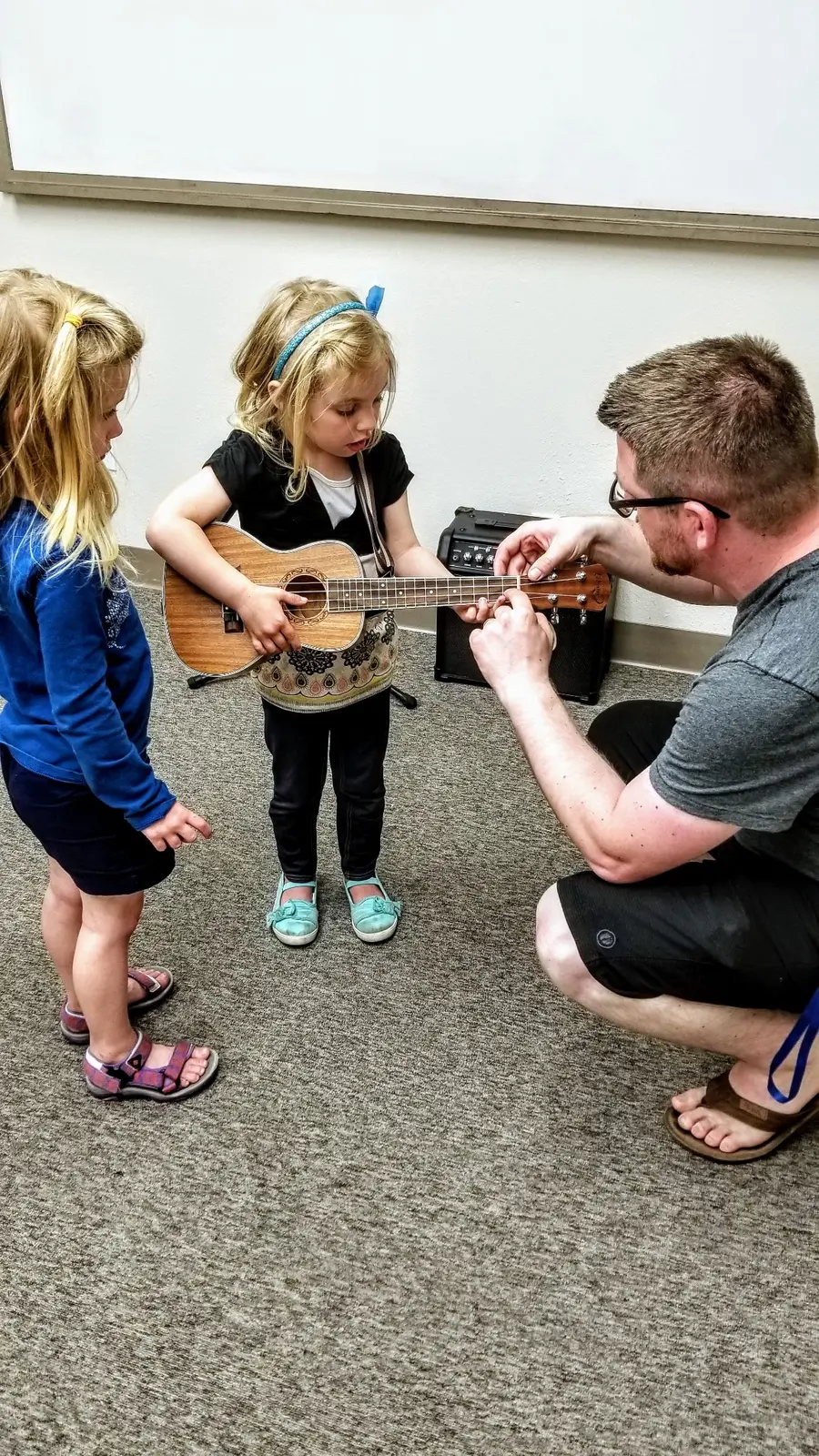
1. How to hold and tune the instrument
Comfortable posture, relaxed hands and accurate tuning affect everything that follows. A beginner should learn how the guitar sits against the body, where the thumb supports the fretting hand and how to use a tuner before trying to memorize a large vocabulary.
2. Clear notes with minimum tension
Press close behind the fret using only the force needed for a clean sound. Beginners often squeeze too hard or let unused fingers collapse into nearby strings. Fixing those habits early makes chords and melodies much easier.
3. A steady beat
Rhythm is not an advanced topic. Start by strumming muted strings with a consistent pulse, counting out loud and playing along with a slow track or metronome. A simple chord played in time sounds more musical than several chords played without a beat.
4. A small group of useful chords
Learn two or three beginner-friendly chords that belong together, then practice moving between them slowly. The goal is not merely forming each shape—it is changing shapes while the rhythm continues.
5. One complete piece of music
A riff, short melody or simplified song gives every technical skill a purpose. Finishing something small also builds more confidence than beginning ten songs and completing none.
6. A repeatable practice routine
Use a short sequence: tune, warm up, isolate one difficult change, play the current song and end with something enjoyable. Students in beginner guitar lessons online receive a plan based on their age, pace and musical interests.